
Dry vs wet pet food: dry food (kibble) has about 10% moisture or less, keeps well after opening and costs less per meal. Wet food, on the other hand, has around 70 to 80% moisture, is very palatable and adds water to the diet. Neither is better in every case, so many owners and breeders combine both, as long as the total daily amount stays within the feeding guide. This guide explains the differences, how to compare the two fairly, and how to mix them.
Dry vs wet pet food: the main differences
| Dry food | Wet food | |
|---|---|---|
| Moisture | About 10% or less | Usually 70 to 80% |
| Energy per gram | High, so portions are small | Lower, so portions are larger for the same calories |
| Storage after opening | Closed bag, cool and dry place | Refrigerate and use within the time on the pack |
| Palatability | Good | Usually higher (aroma, texture) |
| Cost per day | Lower | Higher |
| Best use | Main daily diet, bulk feeding | Extra water, picky eaters, mixing with dry food, older animals |
How to compare them on a dry matter basis
Because wet food is mostly water, its nutrient percentages look low. To compare fairly, divide each nutrient by the dry part of the food: nutrient % ÷ (100 − moisture %) × 100. This is the same method used in industry nutrition guidelines such as the FEDIAF nutritional guidelines.
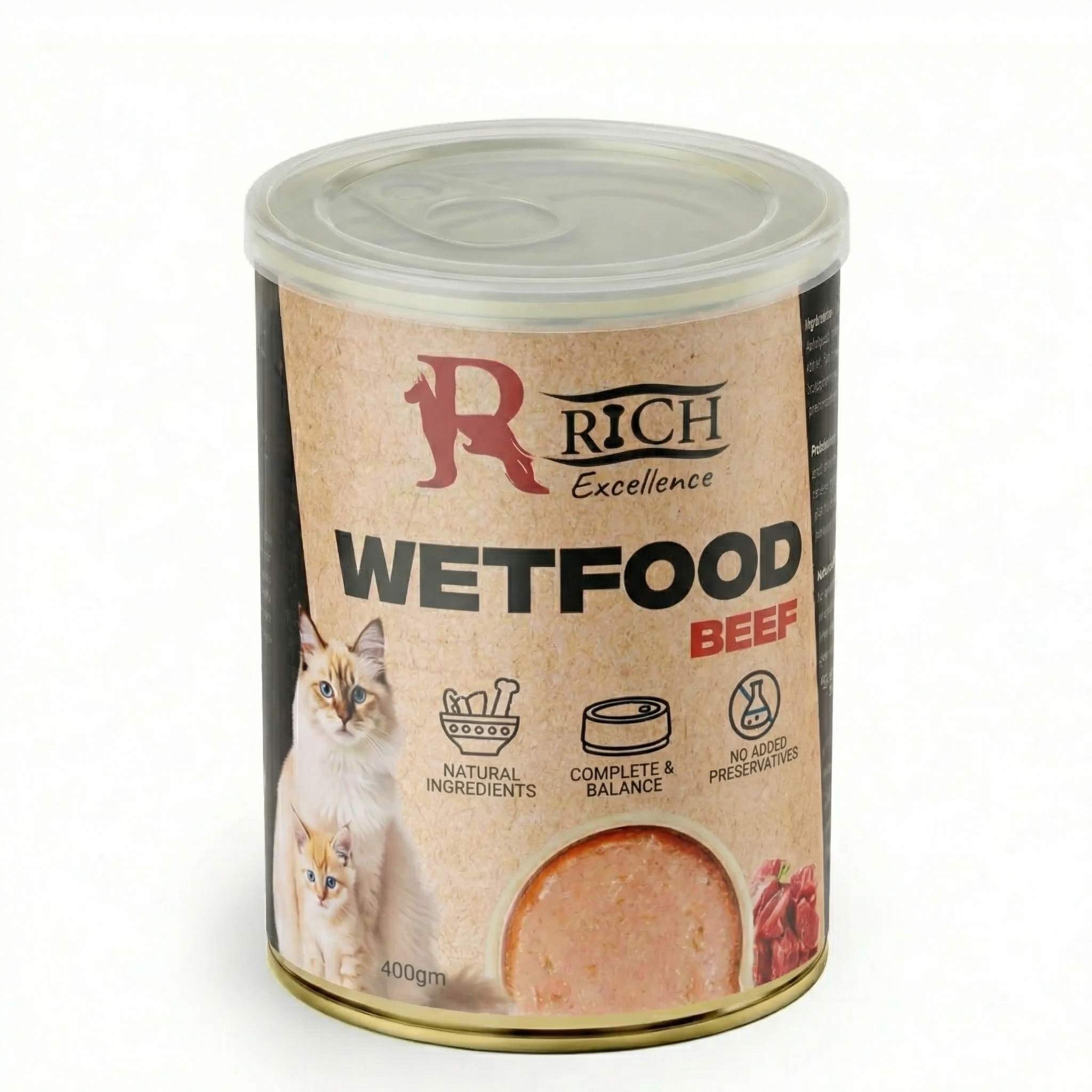
For example, Rich Excellence wet cat food lists 8% crude protein and 70% moisture. That is 8 ÷ 30 × 100, or about 27% protein on a dry matter basis. Similarly, Rich Excellence wet dog food (9% protein, 70% moisture) has 30% on a dry matter basis. In comparison, Rich Excellence dry food lists 30% protein for adult cats and 26% for adult dogs, as fed. Our guide how to read a pet food label explains this method in detail.
Cats and water
Cats often drink little on their own. Therefore, wet food is a simple way to add water to their diet. Many owners give one wet meal a day alongside dry food. In any case, always keep fresh water available, whatever the diet.
Which one should you choose?
First, think about the animal. A growing puppy or kitten needs a growth formula, whether dry or wet. Next, think about the routine. Dry food suits busy homes, kennels and catteries because it is easy to store and portion. Wet food, however, helps with picky eaters and older animals, and it adds water for cats. Finally, think about the budget: a dry base with some wet meals is a balanced choice for many homes.
How to mix dry and wet pet food
- Keep the total within the feeding guide. If you add a can, reduce the dry portion so the animal does not get too many calories.
- Change gradually over about a week when you introduce a new food.
- Serve wet food fresh and remove leftovers after the meal.
- Match the life stage: use puppy or kitten formulas for growing animals.
RICH dry and wet food
- Dry: Rich Excellence for dogs (Adult 26% protein, Puppy 28%) and cats (Adult 30%, Kitten 28%, plus a dry food with treats), in 1 kg and 20 kg bags. See dog dry food and cat dry food.
- Wet: Rich Excellence 400 g cans for cats (chicken, beef, seafood, chicken & shrimp) and dogs (chicken, beef, liver, duck), lactose-free, plus Meaty Cubes chunks. See cat wet food and dog wet food.
Retailers and distributors can ask for wholesale prices on WhatsApp (+20 111 113 4568) or through the contact page.
Frequently asked questions
Is wet food or dry food better for cats?
Both can be complete diets. Wet food adds water and is very palatable, while dry food is convenient and economical. As a result, many cats do well on a mix of both, within the daily feeding guide.
Can I mix wet and dry dog food?
Yes. Reduce the dry portion when you add wet food so the total calories stay the same, and change gradually over about a week.
Why does wet food show less protein than dry food?
Because it is mostly water. Convert both to dry matter: Rich Excellence wet cat food with 8% protein and 70% moisture has about 27% protein on a dry matter basis.
How long can opened wet food be kept?
Refrigerate it after opening and use it within the time printed on the pack. Also, remove uneaten food from the bowl after the meal.