
Puppy food is made for growth: it has more energy, more protein and a carefully balanced calcium and phosphorus level than adult dog food. A puppy should stay on puppy food until it is close to its adult size, then move to adult food gradually over about a week. This guide explains the differences, when to switch and how to do it safely.
Why puppy food is different
Puppies grow fast, so they need more energy and protein for each kilogram of body weight than adult dogs. In addition, their bones are still forming, which is why calcium and phosphorus must stay within a safe range. European nutrition guidelines from FEDIAF give separate recommendations for growth and for adult maintenance for this reason.
Puppy food vs adult dog food: RICH example
| Per kg | Puppy formula | Adult formula |
|---|---|---|
| Crude protein | 28% | 26% |
| Crude fat | 14% | 9% |
| Crude fibre | 2.9% | 2.9% |
| Crude ash | 5% | 8% |
| Calcium / Phosphorus | 1.5% / 1.2% | 2.7% / 0.9% |
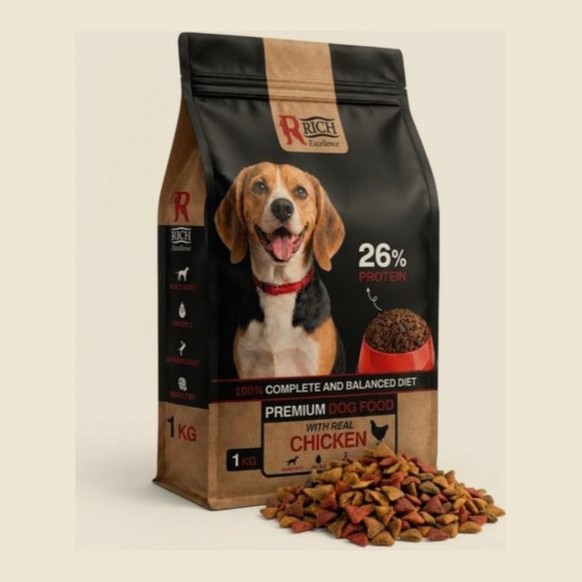
These are the published figures for Rich Excellence Dry Food for Dogs with chicken. For example, the Puppy formula has more fat, which means more energy for growth, and a different calcium and phosphorus balance.
When to switch from puppy food to adult dog food
- Small and medium breeds: usually around 12 months.
- Large and giant breeds: often later, because they keep growing for longer. Ask your vet for the right age.
- Body condition matters too: if your puppy gets too heavy, talk to your vet before changing food.
How to switch to adult food safely
Change food gradually over about seven days. First, mix about a quarter of the new food with the old food for two days. Next, use half and half for two days. Then use three quarters new food, and finally move fully to the new food. As a result, the stomach adapts and upsets are less likely.
Feeding tips for puppies
- Feed small meals: young puppies usually eat three or four meals a day, then two meals as they grow.
- Follow the feeding guide on the pack and adjust to body condition.
- Do not add calcium to a complete puppy food unless your vet advises it.
- Always keep fresh water available.
Breeders can see more options in our pet food guide for breeders, and our guide to reading a pet food label explains each line of the analysis. The full table for each formula is in Rich Excellence Dry Food for Dogs.
For the official nutrient recommendations, see the FEDIAF nutritional guidelines.
Shops, breeders and distributors can ask for wholesale prices on WhatsApp (+20 111 113 4568) or through the contact page.
Frequently asked questions
What is the difference between puppy food and adult dog food?
Puppy food has more energy and protein and a balanced calcium and phosphorus level for growth. Adult food is made to maintain a dog that has finished growing.
When should a puppy switch to adult dog food?
Small and medium breeds usually switch around 12 months. Large and giant breeds often switch later; ask your vet.
How do I switch from puppy food to adult food?
Mix the new food in gradually over about seven days: a quarter, then half, then three quarters, then all new food.
How many meals a day does a puppy need?
Young puppies usually eat three or four small meals a day, then two meals a day as they grow.
Can an adult dog eat puppy food?
Occasionally it does no harm, but puppy food has more energy, so adult dogs fed it every day can gain weight. Use an adult formula for daily feeding.