
For most dogs, the answer to how many dental sticks per day is one: one dental stick a day is enough. Choose a stick sized for your dog’s weight, follow the feeding guide on the pack, and count it as part of the daily treat allowance, which vets commonly put at about 10% of daily calories. More sticks do not clean the teeth faster; they mainly add calories.
How many dental sticks per day: the short rule
Dental sticks are designed to be chewed once a day, usually after a meal or as a daily reward. In other words, the benefit comes from chewing every day, not from giving several sticks at once. So, unless the pack says otherwise, give one stick per day, and adjust only on the advice of your vet.
In addition, remember that a dental stick is a treat, not a meal. It is a complementary food, so it should never replace your dog’s complete daily food.
Match the dental stick to your dog’s size
Size matters as much as the number. A stick that is too small can be swallowed in large pieces, while a stick that is too large may be hard for a small dog to hold and chew. Therefore:
- Small dogs: choose sticks made for small or small-to-medium dogs.
- Medium and large dogs: choose sticks made for medium or large dogs, so the dog has to chew rather than gulp.
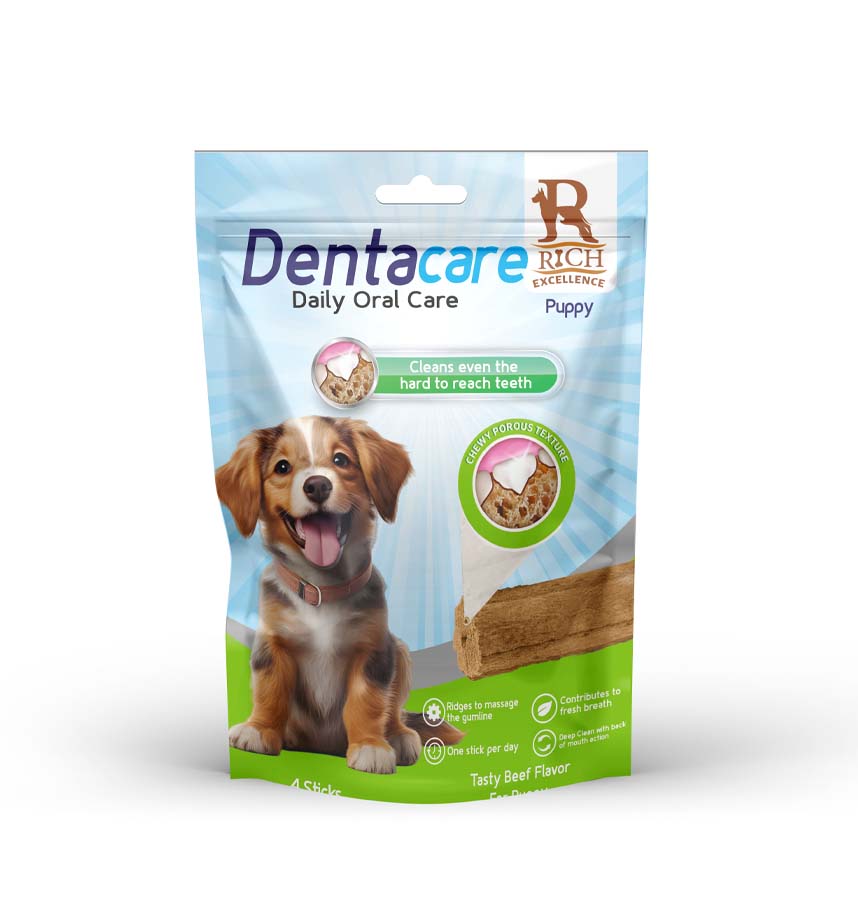
- Puppies: check the minimum age on the pack before giving any dental chew, because young puppies have small mouths and changing teeth.
Count dental sticks within the 10% treat allowance
Every treat adds calories: dental sticks, biscuits, chews and table scraps all count. If your dog already gets other treats during the day, a dental stick may push the total too high. As a result, many owners give the dental stick and then reduce other treats, or slightly reduce the main meal on days with extra rewards. If you also give long-lasting chews, read our guide to rawhide chews for dogs as well.
Signs your dog is getting too many dental sticks
- Gradual weight gain or a loss of waistline.
- Soft stools or an upset stomach after treats.
- Less interest in the main meal.
- Gulping sticks quickly instead of chewing them, which can mean the size is wrong.
If you notice any of these, go back to one stick a day (or fewer), check the size, and ask your vet if the problem continues.
Dental sticks support brushing, they do not replace it
Chewing adds a mechanical action between brushings. However, daily brushing with a dog toothpaste is still the most effective home care, and your vet should check the teeth at regular visits. Our dog dental care guide explains a simple daily routine. Some dental products also carry the seal of the Veterinary Oral Health Council (VOHC), which reviews evidence for plaque and tartar claims.
Dental sticks from RICH
RICH makes two dental stick lines under the Rich Excellence brand:
- Denta Life, 3 sticks per pack, in two sizes: small and medium dogs and large and medium dogs.
- Denta Fresh soft star-shaped sticks, 4 sticks per pack, for medium and large dogs, in mint, chicken, liver, beef and salmon. See Denta Fresh mint.
With 3 or 4 sticks per pack and one stick a day, a pack is easy to plan around. Shops and distributors can ask for wholesale prices through the contact page.
Frequently asked questions
Can I give my dog two dental sticks a day?
One stick a day is the usual guidance. Give more only if the pack’s feeding guide allows it and the extra calories fit within your dog’s daily treat allowance.
When is the best time to give a dental stick?
Many owners give it after a meal or at the same time every day, so it becomes part of the routine. Always supervise your dog while it chews.
Can puppies have dental sticks?
Check the minimum age on the pack first. Young puppies have small mouths and changing teeth, so wait until the product is suitable for their age and size.
Do dental sticks replace brushing my dog’s teeth?
No. Dental sticks support daily brushing and vet checks, but they do not replace them.