
A complete and balanced wet food can be fed on its own as your pet’s daily diet, because it supplies all the nutrients a cat or dog needs for a given life stage. To check, look for the statement on the can: “complete” or “complete and balanced” means it can be the main meal, while “complementary” or “for supplemental feeding only” means it must be fed alongside another complete food.
What “complete and balanced” means for wet food
“Complete” means the food contains every essential nutrient, such as protein, fat, vitamins and minerals. “Balanced” means those nutrients are present in the right amounts and ratios to each other. In other words, the food can be the only thing your pet eats, day after day, without causing a deficiency or an excess.
This matters especially for wet food. Some cans and pouches are full meals, while others are toppers, broths or treats that look similar but are not designed to be fed alone. Cats, for example, need taurine and other nutrients from their daily food, so feeding only a complementary product for weeks can leave gaps.
How to check if a wet food is complete and balanced
Turn the can over and look for these four things:
- The statement. In Europe the label says “complete feed” or “complementary feed”. In the United States, the nutritional adequacy statement says the food is “complete and balanced”, or that it is “intended for intermittent or supplemental feeding only”.
- The species. A complete wet cat food is balanced for cats, and a complete wet dog food for dogs. Cats and dogs have different needs, so one should not replace the other.
- The life stage. The statement should name a stage: growth (puppies and kittens), adult maintenance, or all life stages. A food that is complete for adults is not automatically right for a growing kitten.
- The feeding guide. A complete food gives daily amounts by body weight. Toppers and treats usually give a much smaller serving or say “feed with a complete food”.
If the can says nothing about being complete, treat it as complementary until the manufacturer confirms otherwise.
Complete vs complementary wet food
| Complete wet food | Complementary wet food | |
|---|---|---|
| Can be fed alone | Yes, as the daily diet | No, only alongside a complete food |
| Typical examples | Cans and pouches labelled as a full meal | Toppers, broths, creamy treats, some chunks |
| Label wording | “Complete feed”, “complete and balanced” | “Complementary feed”, “for supplemental feeding only” |
| Feeding guide | Daily amount by body weight | Small serving, or “feed with a complete food” |
How to compare wet food on a dry matter basis
Wet food is mostly water, so its protein and fat percentages look low next to dry food. However, that does not mean it is less nutritious. To compare fairly, remove the water: divide the nutrient by (100 minus the moisture) and multiply by 100.
For example, Rich Excellence wet cat food lists 8% crude protein, 2% crude fat and 70% moisture. On a dry matter basis that is about 27% protein and 7% fat. Rich Excellence wet dog food lists 9% protein, 3% fat and 70% moisture, which is 30% protein and 10% fat on a dry matter basis. The guide to reading a pet food label explains the other lines on the can.
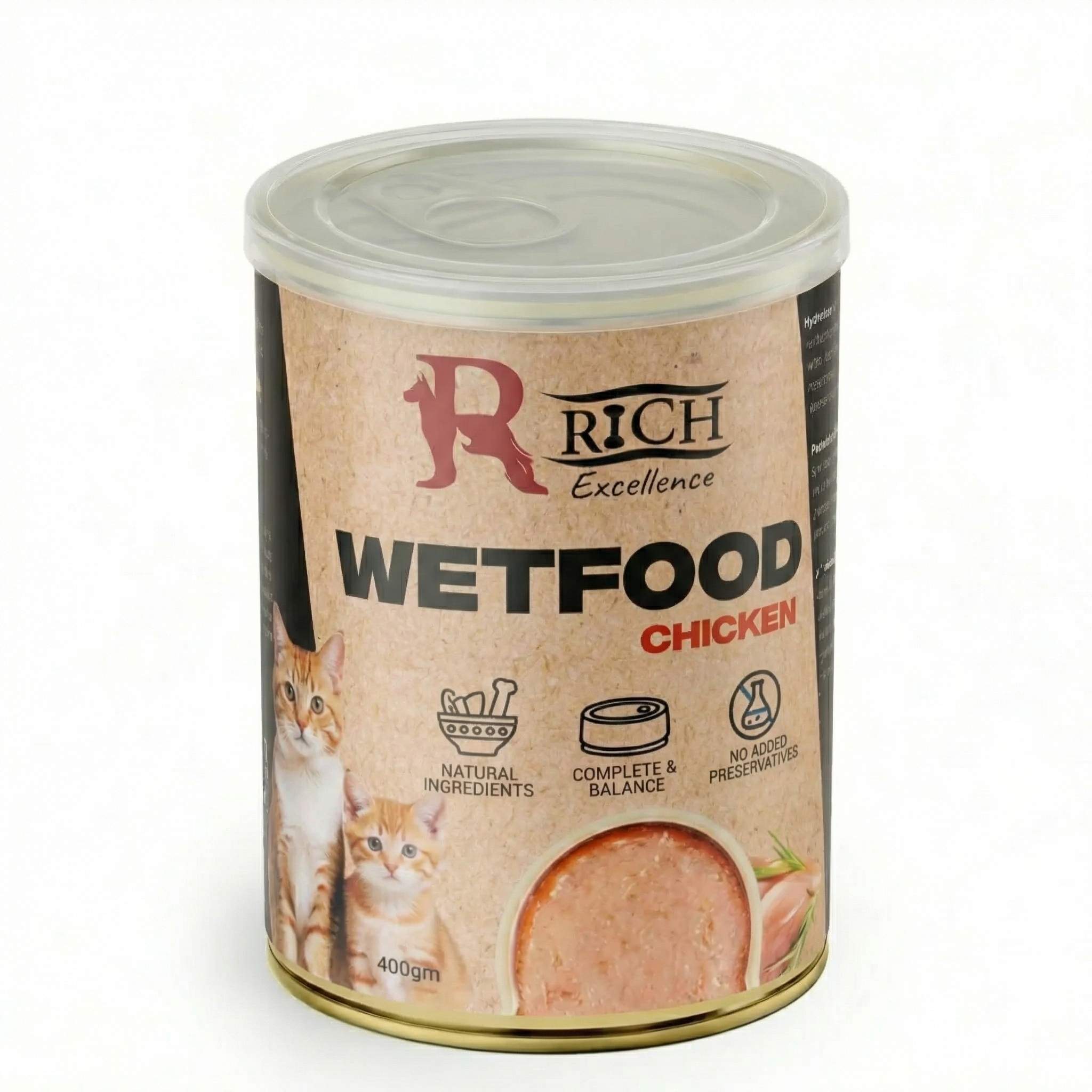
Rich Excellence wet food
RICH makes Rich Excellence wet food in 400 g cans at its own factory in Giza, Egypt. The range is described as a complete and balanced meal: wet cat food in chicken, beef, seafood, and chicken & shrimp, and wet dog food in chicken, beef, liver and duck. Both are lactose-free, with no added preservatives.
Many owners also mix wet and dry food, for instance a can at one meal and kibble at the other. If you do, reduce each portion so the total stays right for your pet’s weight. See dry vs wet pet food for how to mix them.
Tips for retailers and distributors
When you stock wet food, place complete meals and complementary products on separate shelves or label them clearly, so customers do not replace a full meal with a topper by mistake. Also ask each supplier for the full specification of every wet product: the complete or complementary statement, life stage, analysis and shelf life. For the full background on how labels are regulated, see AAFCO’s guide to reading pet food labels and the FEDIAF nutritional guidelines.
Frequently asked questions
Can a cat or dog eat only wet food?
Yes, if the wet food is labelled complete (or complete and balanced) for that species and life stage. Fresh water should always be available, and the amount should follow the feeding guide and your pet’s body condition.
Is wet food less nutritious than dry food?
Not necessarily. Wet food looks lower in protein because it contains about 70 to 80% water. On a dry matter basis, many wet foods have as much protein as dry food, or more.
What does “complementary” mean on a can of pet food?
It means the product is not a full diet on its own. It is designed to be fed together with a complete food, for example as a topper or a treat.
Is Rich Excellence wet food complete and balanced?
Rich Excellence wet cat food and wet dog food are described as a complete and balanced meal. Distributors can ask RICH for the full specification of each flavour.